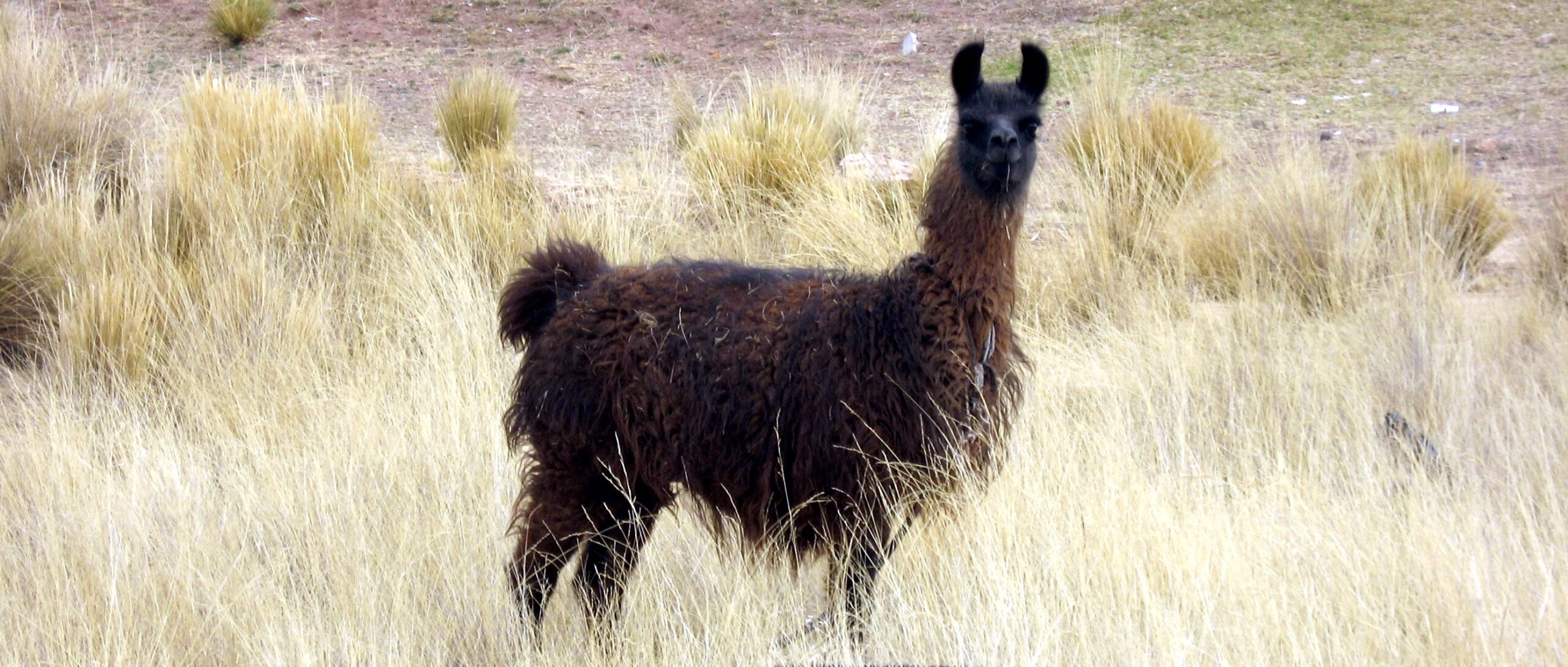
Andean populations have been hunting and herding camelids for millennia and they continue to be central to highland life ways today. What is a camelid (or camélido in Spanish)? In the Andean context, this includes domesticated llamas and alpacas and their wild relatives, the guanaco and vicuña. While many are familiar with llamas, which primarily were domesticated as pack animals, and alpacas, which were selected for their incredibly fine fiber, vicuña and guanaco and not well-known outside of the Andes. In this section, which is “under construction,” you will find information about Andean camelids and highland herding communities from archaeology, cultural anthropology, animal sciences/genetics, and a diversity of other sources.
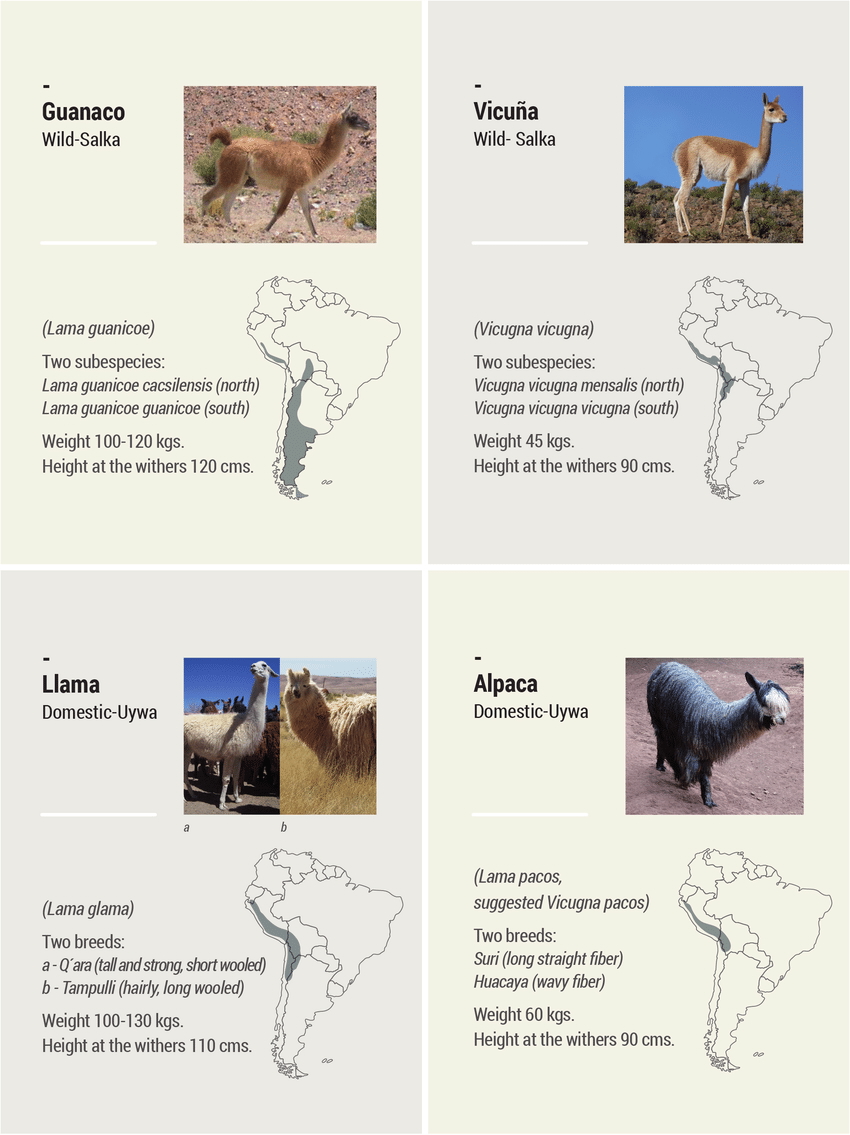
The four camelids: taxonomy, subspecies, breeds, and original distribution. Salka and Uywa are the Quechua names for wild and domestic, respectively.
“The domestication of South American Camelids: A Review” (Yacobaccio 2021)
Natural & Cultural Resources of the High Andes
Camelids can be found in many regions of the Andes, with a concentration at higher elevations. In fact, many herding communities live above the limit of agriculture (too cold for even potatoes or quinoa!) and move their llamas and alpacas seasonally to rich grazing areas. A very important feature of these high elevation areas are bofedales, which are high-elevation peat wetlands that are fed by glacial run-off and host a diversity of plant communities eaten by camelids. While bofedales appear to be a “natural” feature at first glance, highland herders (and perhaps the early hunters in the region) have been modifying these areas for millennia to increase water flow and other important features. Today they are under threat from climate change, overgrazing, and contamination, which risks the very livelihood of pastoralist communities living in these regions. Here are some resources (more to come!) about camelids, bofedales and Andean herders:
Camelids of the Andes
- Bonavia, D. (2009). The South American Camelids: An Expanded and Corrected Edition. Cotsen Institute of Archaeology Press. Retrieved from https://escholarship.org/uc/item/7xs9j2zs [full PDF]
- Flores Ochoa, Jorge A., Kim MacQuarrie, Javier Portús, and Jaume Blassi, eds. (1994). Gold of the Andes: The Lamas, Alpacas, Vicuñas and Guanacos of South America. Francis O. Patthey and Sons, Barcelona.
Bofedales
- Bofedal distribution in the Peru highlands, as illustrated by the National Inventory of Bofedales in 2023 (ArcGIS map and publication).
- Yager, Karina. Environmental anthropology, bofedales, Indigenous communities in Bolivia (many of the publications are open access).
- Yager, K., Manuel Prieto, Rosa Isela Meneses (2021). Reframing Pastoral Practices of Bofedal Management to Increase the Resilience of Andean Water Towers. Mountain Research and Development, 41(4): A1-A9. https://doi.org/10.1659/MRD-JOURNAL-D-21-00011.1
Andean Ethnographies
More coming soon! There are a number of studies of herding populations written by cultural anthropologists, with many of the most-cited written by Cuzqueño anthropologist Jorge Flores Ochoa starting in the 1960s. These publications explore human/animal interactions (economic, ritual, etc.), herd management in daily life, and relationships with the landscape. A recent ethnography from the highlands of Cuzco was published by anthropologist Allison Caine: Restless Ecologies: Climate Change and Socioecological Futures in the Peruvian Highlands (2025).
Recent efforts to support highland herders
Below is a webinar (summer 2026) discussing the ongoing efforts of the Chijnaya Foundation and Asociación Pro-DIA non-profits in Puno, Peru, to support highland herding communities through bofedal restoration, fiber improvement, and increased access to wool markets. I present a brief introduction to the history of human/camelid interaction in the region (@8 mins) and David Cajo (@23 mins) discusses the on-the-ground efforts of Pro-DIA and alpaca herders in the region. [Blog entry (2023) on the bofedal restoration project].